A Room by Room Window Treatment Guide for Avon Homes
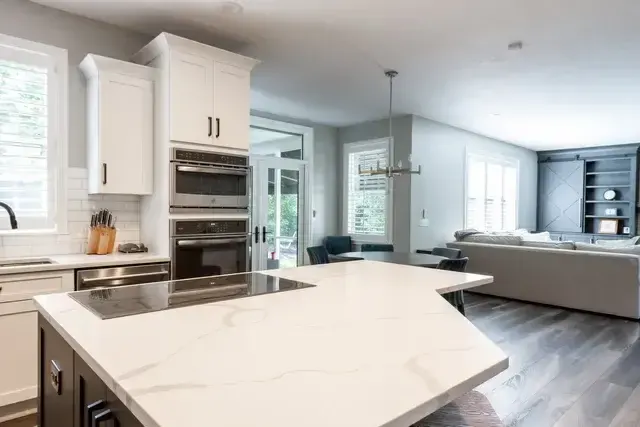
Most houses get one window treatment decision applied to every opening, and that's why so many of them feel a little off. A kitchen has a different problem than a bedroom. A west facing great room has a different problem than a north facing dining room. This is a walk through an Avon house one room at a time, naming the light problem and the privacy problem in each space before naming any product, including what neighbors in Prestwick (Prestwick Estates, Parks of Prestwick, Prestwick Glen, Royal Troon Village, Muirfield Village, Turnberry, Glen Eagles), Avon Estates, Avon Trails tend to run into.
Every room has a different problem
The mistake that costs the most is picking one product and putting it everywhere. A shade that's perfect over a kitchen sink is the wrong answer in a bedroom, and the fabric that saves a west facing family room from glare will make a north facing dining room feel gloomy. Walk the house and name the problem in each room first. The product comes after.
Bedrooms
Bedrooms are the one place blackout is worth the money, and they're also where expectations need managing. A blackout shade on an inside mount still lets a thin line of light down each side, because factory deductions make the shade slightly narrower than the opening so it can move freely. If you truly want a dark room, the answer is an outside mount that overlaps the trim, or side channels that capture the edges. Say the word "dark" out loud at the measure and let the measurer solve it, rather than discovering the gap the first Saturday morning.
In a child's room, cordless lift is the default. Loose cord is the hazard this whole product category has spent decades engineering out, and ANSI/WCMA A100.1-2022 is the product standard behind that work. It describes the product, so ask whether the exact item you're ordering conforms.
Front rooms and anything you can see from the street
These openings carry the exterior look, so they get decided together even when the rooms behind them are used differently. Drive a street in Avon and the houses that look finished are the ones where the front windows agree with each other. Shutters do that better than anything else, because they hold their shape and the louvers line up. If shutters are out of budget, a single roller or cellular shade in one color across the front does the same job for far less.
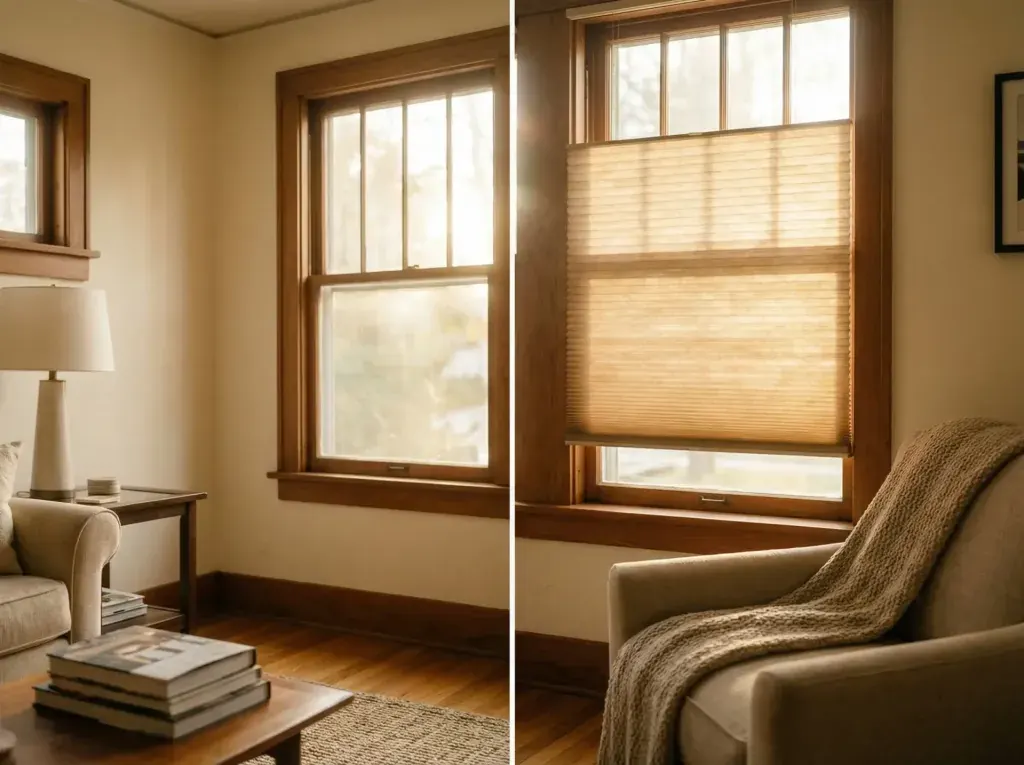
Privacy in a front room is usually a nighttime problem, not a daytime one. A top down bottom up cellular shade covers the lower half of the glass while daylight comes over the top, so the room stays bright and nobody on the sidewalk sees in. It's the most useful configuration in the whole catalog and most people have never heard of it.
Making it hold together
Two rules keep a house from looking like a catalog. Keep one product family per floor and vary the fabric rather than the system. Then match the mount type on any two openings you can see at the same time, because a shade sitting inside one opening next to a shade sitting on the trim of another is the kind of thing you can't stop noticing once you've seen it.
Order by room, not by product. Fabric is dyed in batches, and two shades in the same color bought months apart can read slightly different in afternoon light. Homes across Avon vary a lot in age and window shape, and the room at a time approach is what keeps a phased project looking intentional instead of assembled.
Take the order seriously and the rest of it gets simple. Light first, then privacy, then who operates it, then the mount, then the material. Get an in home measure before you commit to anything, and ask what the diagonals came out to. Avon Window Treatments is insured and insured, and we'll put the mount type and lift type in writing for every opening before anything is ordered. Call (317) 854-7158 when you want the measure on the calendar.
Living rooms, great rooms and the television problem
Nearly every Avon house has one room where the late day sun makes a screen unreadable. That's a glare problem, not a privacy problem. Solar shades solve it by openness factor rather than by color. A 5 or 10 percent fabric keeps a soft view of the yard and knocks the worst of the glare down. A 3 percent fabric cuts more light and gives up some of that view. A 1 percent fabric is nearly a wall during the day. Darker fabrics see out better and control glare better. Lighter fabrics bounce more light back and look brighter from outside.
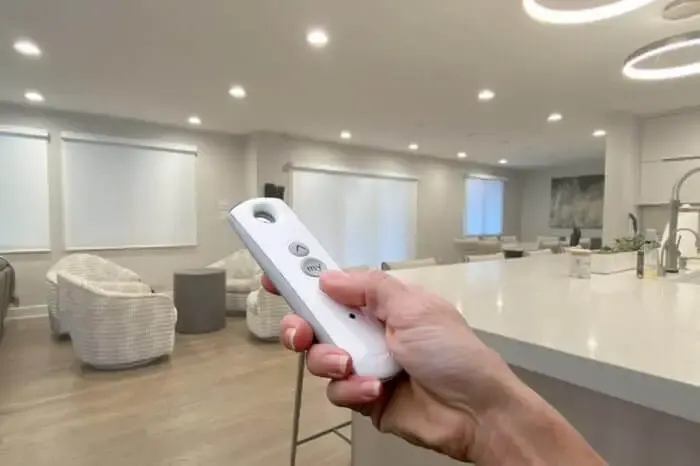
Rooms with two story glass are where reach becomes the real issue. Anything above eight feet is a nuisance to operate by hand, and that's the case where motorization stops being a luxury. Watch stack height too. On a tall window, a woven wood or a Roman shade keeps a stack of material at the top even when it's fully raised, and on a short window that stack eats the view.
Dining rooms, offices and stairwells
Dining rooms are the room where drapery earns its cost, because hard surfaces and a big table make an echo, and fabric absorbs it. A home office is a glare calculation aimed at one screen, so sit in the chair at the hour you actually work and look at where the sun lands. Stairwells and transoms are about reach and about the shape of the opening, and a fixed treatment or a motorized shade beats a pole every time.
Kitchens
Kitchens want a material you can wipe and a lift you can reach with one hand while holding something in the other. Faux wood over the sink is standard for a reason: steam and splatter don't bother it. Keep the control on the side away from the sink so nobody reaches across a hot pan. Long panels of drapery near a range are worth avoiding entirely. If there's a door to a deck, remember that the treatment has to clear the handle and survive the door being used forty times a day.
Bathrooms and laundry
Humidity rules here. Real wood cups and separates in a room that steams up twice a day, so composite shutters, faux wood or a vinyl backed roller shade are the durable picks. Privacy is usually needed at the glass line rather than the whole opening, which is another case for top down bottom up. Laundry rooms are where a modest product belongs so the budget can go somewhere it shows.
Frequently Asked Questions
Should I do inside mount or outside mount?
Inside mount sits within the opening and shows the trim, which looks cleaner and is what most people picture. It needs enough flat depth for the headrail, and it always leaves a small light gap along each side because the product is built slightly narrower so it can move. Outside mount sits on the trim or the wall above the opening. It covers more light, hides an out-of-square opening, and works when the depth isn't there. Bedrooms often go outside, living spaces usually go inside.
How long does custom product take to arrive?
Plan on two to five weeks from the day you approve the order to the day it gets installed. The product doesn't exist yet when you order it. The factory builds it to your finished width and height, then it ships and gets scheduled. Shutters usually sit at the longer end of that window, and simple rollers at the shorter end. Nothing in this trade needs to happen overnight, so treat anyone selling speed with some suspicion.
Is cordless worth the extra cost?
In any room where children or pets spend time, yes, without much debate. Loose cord is the hazard the whole product category has engineered around, and ANSI/WCMA A100.1-2022 is the product standard covering cord access. It describes the product itself, not the company, so ask whether the specific item you're ordering conforms. In a room nobody small ever enters, corded is still a reasonable way to keep the budget down.
Can I do the house in stages?
Yes, and most people should. The one rule is to order by room rather than by product type. Fabric is dyed in batches, so two shades in the same color ordered months apart can read slightly different in afternoon light, and there's no fixing that later. Finish one room completely, then move to the next. Front-facing rooms and the primary bedroom are the usual first phase because they carry the most benefit.
 What Cellular Shades Cost in Avon and What You Get
 New Construction Window Treatments in Avon: Timing
 What Motorized Shades Cost in Avon and Where They Pay