New Construction Window Treatments in Avon: Timing
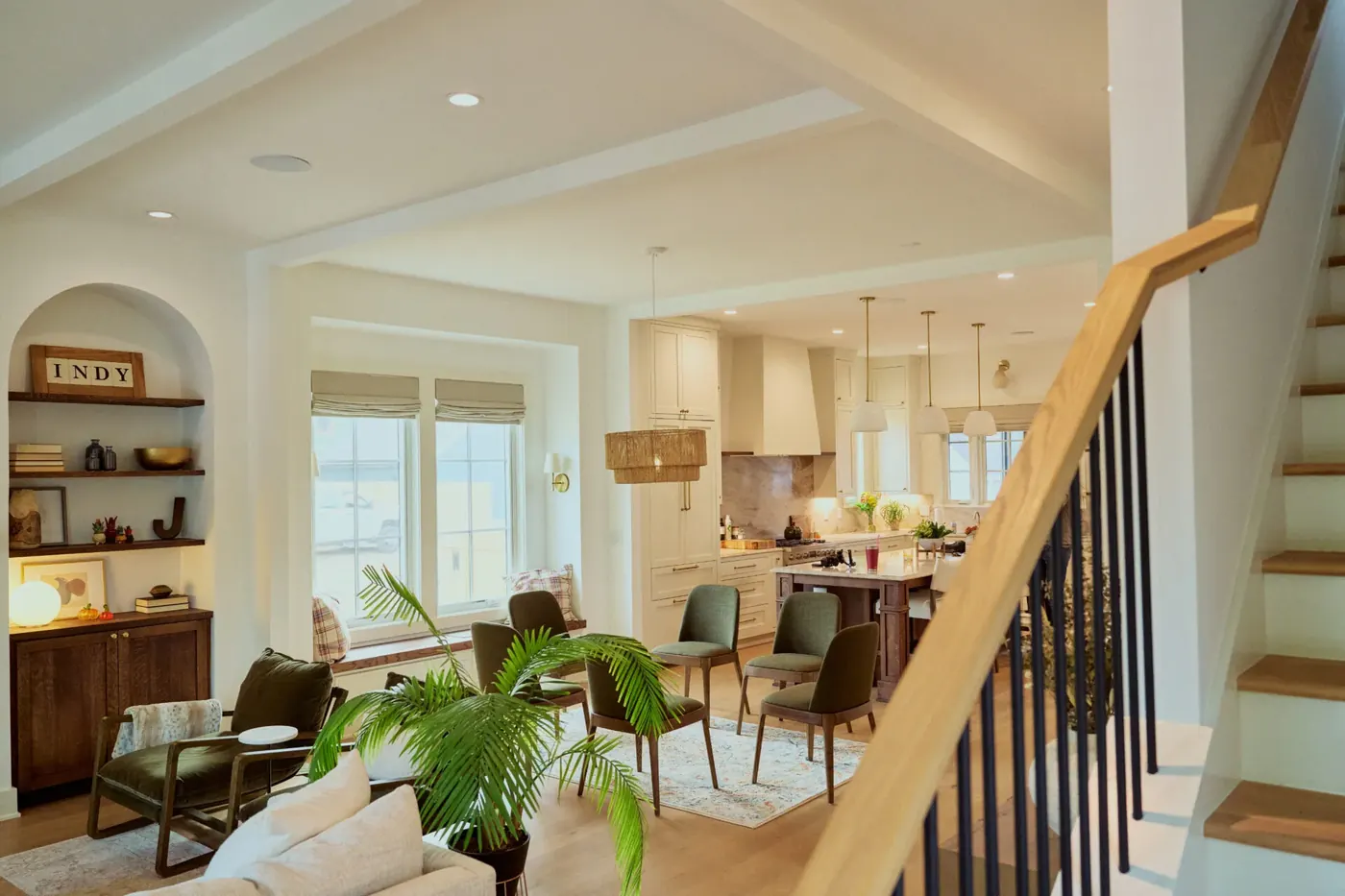
Nobody budgets for window coverings until the house is nearly done, and by then the money is mostly spent. A new home has more windows than the last one, and they are usually taller. The builder allowance covers a fraction of what the house needs. Here's what that allowance actually buys, where the money goes in a new Avon home, how to phase the work, and how to spread the job out without making it look spread out.
What builder blinds actually are
Most new houses arrive with a window covering package included in an allowance, and it's nearly always a stock product cut down to fit. That isn't a scandal. It is a supply decision. A builder finishing many homes needs a product that can be ordered in quantity and adjusted on site, which means standard widths in fixed increments and a cutting machine that shortens the headrail and trims the slats and bottom rail to match.
The result works. It also has consequences nobody explains at the design center:
- The cut edge isn't a factory edge. Look at the end of the slats and you can usually see it.
- Hardware inside the headrail doesn't move when the rail gets shortened, so a cord lock or tilt gear can end up closer to one end than looks balanced.
- Color and opacity choices are short. You typically get one white and one light filtering fabric across the whole house.
- The package is sized against the plan and the sales sheet rather than against the rooms you'll actually use.
- Nothing in the package addresses darkness in a bedroom or glare in a room where you work.
Plenty of people in Avon keep the builder package in secondary rooms for years and it is a perfectly reasonable decision. The mistake is assuming it's the finished answer for the whole house.
The two story window wall
Great room walls need their own plan. Nothing eighteen feet up is operable by hand, so motorization stops being a luxury and becomes the only sensible way to run it. Battery motors run roughly $100 to $300 a window less than hardwired, which is tempting until you remember that battery wands need service about once a year and that wall needs a lift to reach. Hardwiring while the walls are open is the move if the timing allows.
Sizing matters too. Very tall shades leave bigger light gaps at the edges, and one major manufacturer notes larger gaps on shades 120 inches and taller or with a height to width ratio near four to one. Splitting the wall into an upper band and a lower band usually behaves better than one enormous shade.
Sequence the house instead of doing it all at once
A new house doesn't need every window covered on day one. What it needs immediately is privacy at eye level: bedrooms, bathrooms, home offices with a screen in the window, and anything the street or a neighbor looks into. Temporary paper shades are inexpensive and they come down without leaving marks, which buys you time to make better decisions.
After that, the rooms you actually live in. Then the decorative layer, which is drapery and top treatments. Living in a house through one summer teaches you which windows are punishing and which ones you never think about, and that knowledge is worth more than any showroom appointment.
Trim style decides how things mount
Walk a new Avon house and you'll find two very different conditions. Some openings have full wood casing with a sill and an apron. Others have drywall returns, where the drywall wraps into the opening and there is no wood at all.
That changes the mount. An inside mount needs enough flat depth to hold a headrail, and a drywall return opening often has plenty. An outside mount needs something solid to screw into, and drywall alone isn't that. On a drywall return opening, an outside mount means either hitting the framing above the opening or installing a mounting board first. Drapery hardware has the same problem in a worse form, because a rod carrying heavy fabric pulls hard on whatever it is anchored to.
If the house is still open, this is the cheapest moment in its life to add blocking behind the drywall where drapery rods will go. Almost nobody does it. It costs a builder a few minutes and it saves a real headache later.
Measure the house that got built
This is the part that matters most. Plan dimensions are nominal. They describe the framing intent, not the finished opening you are going to cover, and the difference isn't small.
Drywall thickness eats into an opening. Corner bead adds a bump at the edges. Trim reveal varies with how the carpenter set the casing. Paint adds a film that's trivial by itself and not trivial when it is the third thing stacking up. An opening the plan calls thirty six inches can finish anywhere across a range of a half inch or more, and it's very often a different width at the top than at the bottom.
So the sequence is: drywall goes in, trim goes on, paint gets finished, and then somebody measures. Not before. A number taken during framing is a guess with a decimal point on it.
There is one exception worth knowing. Drapery gets measured after the finished flooring is in, because the floor height sets the hem length. Hard coverings can be measured before flooring, since they hang from the top. If you're doing both, that usually means two visits, and it is cheaper than a room of drapery that breaks two inches off the floor.
What to budget
Stock coverings run roughly $60 to $600 a window nationally. Custom coverings measured in your home and installed run roughly $250 to $2,600 a window. Custom lead times run two to five weeks, so order before you move into your Avon house rather than after, and give yourself margin if the closing date moves.
Window coverings are the last line item in a new house and the first one people underestimate. Spend where it matters and phase the rest. Get the finish codes recorded so later rooms still match. Avon Window Treatments will price a new Avon home room by room so you can choose the order. We are insured and insured and the quote is written. Reach us at (317) 854-7158 when you're ready to plan it.
Wait for the punch list
Builders adjust trim after the walkthrough. A casing gets reset, a sill gets shimmed, a corner gets patched. If your measure happened before that work, some of your numbers are now wrong. Take measurements after the punch list is closed, or expect to re check the openings that got touched.
The protective film on the glass isn't an issue for measuring, but it's worth pulling before install day so nobody discovers a scratch under a shade that is already hanging.
Frequently Asked Questions
When should window coverings be measured in a new build?
After the drywall is up and the trim and paint are finished, and ideally after the punch list is closed. Plan dimensions describe framing intent rather than the finished opening you will actually cover. Drywall thickness, corner bead, trim reveal, and paint all stack up, and an opening the plan calls thirty six inches can finish anywhere across a range. Builders also adjust trim after the walkthrough, so a measure taken earlier can go stale. Drapery is the exception and gets measured after the finished flooring is in.
Are builder blinds bad?
No, they're a stock product cut down on site, and they work. What they aren't is tailored. A machine on site shortens the headrail and trims the slats and bottom rail, which leaves a cut edge rather than a factory one, and the hardware inside the headrail doesn't move when the rail gets shorter. You usually get one white and one light filtering fabric for the whole house. That is fine in secondary rooms and thin in a bedroom you want dark.
Do I have to do the whole house at once?
Not at all, and most people shouldn't. Cover the rooms that need privacy before you move in, which means bedrooms, bathrooms, the front rooms, and anything at eye level from the street. Use inexpensive temporary paper shades everywhere else. Then do the rooms you actually live in, and leave drapery and decorative treatments for last. Living through one summer tells you which windows are punishing, and that's information no showroom appointment can give you.
What do we do about the two story great room windows?
Break it into separate questions. Do the upper units need covering at all? If they face north and the room is comfortable, leaving them bare is a legitimate answer. If they face west, they are the whole problem. Operation is the next question. Nothing at that height is hand operable, so motorization is practical rather than fancy, and hardwiring while the walls are open beats an annual battery service on a wall that needs a lift. Then split the wall into two bands instead of hanging one giant shade.
 What Cellular Shades Cost in Avon and What You Get
 A Room by Room Window Treatment Guide for Avon Homes
 What Motorized Shades Cost in Avon and Where They Pay