Why Standard Blinds Never Quite Fit a Sliding Glass Door
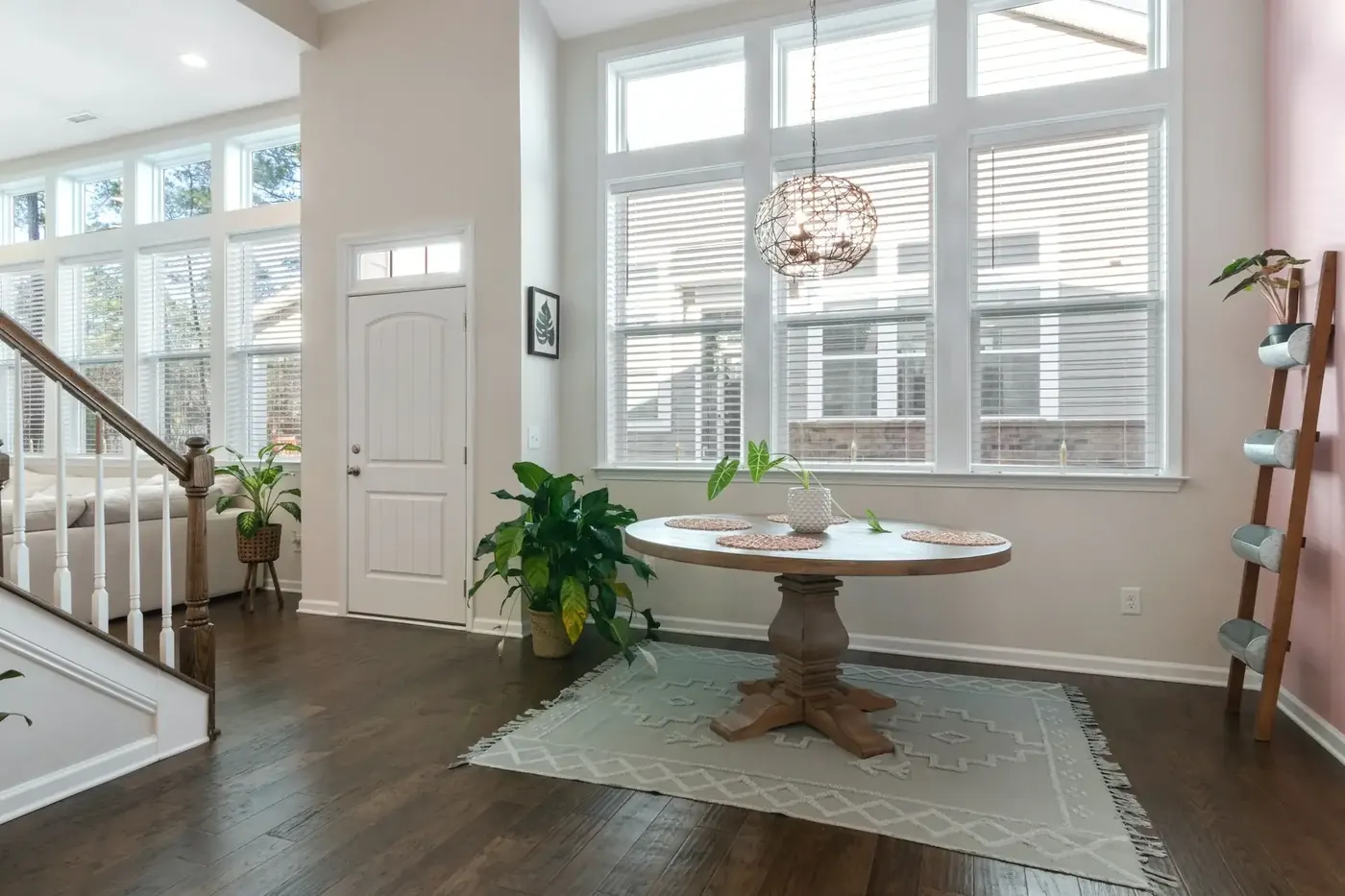
A sliding door treatment has to do two jobs at once, control light and stay out of the way of daily foot traffic, and most standard products are only built for the first one.
Why a Standard Window Treatment Doesn't Work on a Slider
A sliding glass door in a house with kids or pets sees more wear than any other opening, and that changes which window treatment actually makes sense there. The door gets used dozens of times a day, and whatever covers it has to survive that traffic without falling apart within the first year.
Standard mini blinds, built for a window that mostly just sits there, tend to struggle here. The slats are light, the mechanisms aren't built for constant bumping, and a determined toddler or an eighty-pound dog will find the weak point faster than you'd expect.
The good news is that a few product categories are built specifically to hold up to this kind of daily use, and choosing one of those from the start in an Avon home saves a repair call down the road.
What Sliding Door Coverings Cost
As a general national range and not a quote for any specific door, vertical blinds for a typical 6 to 8 foot slider commonly run $150 to $400 depending on the material, vinyl and fabric on the lower end, faux wood on the higher end.
Panel track systems for the same size opening usually run higher, often somewhere between $300 and $700 nationally, since the wider panels and heavier-duty track cost more to produce than narrow vanes. Motorized cellular or roller shades sized across a wide slider can run $500 to $1,200 or more depending on width and fabric grade.
The width of your specific slider and whether it's a two-panel or three-panel door move these numbers quite a bit. A free in-home measure is the most reliable way to see what your door actually needs priced out, rather than guessing from a general range.
A cleaner, more current look on a sliding door is usually a smaller change than people expect, once the width and the door hardware have been measured correctly. A free in-home measure is the easiest way to see the options laid out for your specific door.
Keeping Foot Traffic and Pets from Wrecking the Hardware
A sliding door gets more daily foot traffic than almost anything else in an Avon house, and the covering takes the wear that comes with that. Vertical blind vanes get knocked by shoulders and grocery bags on the way through, and the connecting chain along the bottom can snag on a shoe if it's hanging too low.
Dogs are the other predictable source of wear. A dog that spends time watching the yard will lean on or push through whatever's covering the bottom of the door, and a fabric shade or vinyl vanes left down at nose height for months will eventually show damage.
Panel track's solid bottom rail holds up a bit better against this than individual vanes do, simply because there's one heavy piece instead of several lighter ones for a paw or a shoulder to catch on. Raising the covering during the hours the room sees the most activity, or scheduling a motorized shade to stay up during the day, cuts down on this wear more than switching products alone will.
How the Main Slider Options Compare
Vertical blinds solve the width and the doorway problem at once. The vanes rotate for light control and stack neatly to one side when it's time to walk through, and because each vane is a separate piece, adding width just means adding more vanes rather than engineering one oversized product.
Panel track blinds take that same stacking idea and use wide fabric panels instead of narrow vanes, which reads as a cleaner, more current look in a lot of Avon homes. Fewer seams across the width means less visual clutter than a row of narrow vertical vanes, though panel track typically costs more for the same opening.
Cellular and roller shades bring a softer, more residential look than either option, but they're usually sized to the fixed glass portion of the door rather than the full moving width, unless the whole thing is motorized. On a door where the design goal is a clean uninterrupted look across the entire glass wall, a motorized shade spanning the full width is often the closest match to that goal.
Mounting and Sizing Around a Door That Still Has to Open
Sizing correctly the first time protects the budget as much as it protects the fit on an Avon slider. A custom treatment cut for a slider generally can't be returned or resized once it's made, so a measuring mistake usually means paying for the job twice.
Outside mount is standard on sliders, which simplifies the sizing question somewhat since you're not constrained by frame depth the way you would be on an inside-mount window. The tradeoff is that outside mount needs enough wall space on either side of the door for the stack to land, and homes with a slider close to a corner sometimes need a narrower panel count or a different product to fit that space.
Door hardware clearance factors into sizing too. Skipping the check on the handle and the lock, or missing a screen door track outside, is one of the more expensive mistakes to make, since it usually means remounting the brackets after the fact.
Frequently Asked Questions
How much wider than the door opening should the covering be?
It generally needs to extend a few inches past each side of the frame so the stacked vanes or panels clear the doorway completely when the door is open, without running so wide that it hits a return wall or the corner of the room.
Do sliding door coverings need to clear the door handle?
Yes, and it's one of the details that gets missed most often. Brackets and the stacked panels or vanes need to leave the handle and lock reachable, and if there's a screen door track outside the glass, the mounting needs to clear that too.
What does a typical sliding door covering cost?
As a general national range, vertical blinds for a standard 6 to 8 foot slider commonly run $150 to $400. Panel track for the same size opening runs higher, often $300 to $700, and a motorized shade spanning the full width can run $500 to $1,200 or more.
 Bay and Bow Window Shades: An Avon Homeowner's Guide
 Window Treatments That Actually Hold Up in an Avon Bathroom
 How to Measure Your Own Windows for Blinds or Shades