The Real Cost of Cheap Blinds in Avon Rental Properties

Walk any rental unit at move-out and the window coverings usually tell you more about what happened in that apartment than anything else in the walkthrough.
Why Rental-Grade Window Coverings Aren't the Same Product as Retail
Anyone who's walked a unit at move-out in Avon knows the list: a bent slat here, a missing tilt wand there, a cord that's been chewed by whatever pet the lease technically didn't allow. Retail-grade blinds bought for a homeowner's living room were never designed with that use case in mind. Rental-grade product is built around the assumption that it needs to survive people who didn't choose it and won't be around to maintain it.
Vinyl and faux wood blinds are the default for a reason. They shrug off the kind of everyday abuse that would dent or discolor real wood, and replacing one damaged slat or an entire cheap unit costs a fraction of what a nicer material would. A scratched or gouged real wood slat is often a whole-blind replacement, while a vinyl slat can sometimes be swapped individually if the line is still in stock.
Weighing Upfront Cost Against How Often You'll Replace It
At the scale of a full building, a few dollars per window in either direction turns into a real number, so the upfront unit cost gets a lot of attention during planning. It shouldn't be the only number that matters. A slightly higher spec that survives more turnover cycles before replacement can cost less over five years than the cheapest option reordered repeatedly.
National pricing ranges for vinyl and faux wood blinds at volume give a reasonable planning number for a pro forma, but actual figures depend on the specific sizes, colors, and quantities involved, and should be confirmed against real measurements before locking in a building-wide budget. That confirmation step matters more on a larger project, where a pricing assumption that's off by even a small amount per window compounds fast once it's multiplied across an entire Avon building.
Walking a sample of units with someone who sees this kind of wear regularly, through a free in-home measure, is a reasonable way to figure out which product upgrades are actually worth it for your property.
Ordering and Installing Across Multiple Units or Buildings
Standardizing on two or three sizes and one or two colors across a property makes reordering faster and lets a maintenance closet hold a small stock of spares that fit anything in the building. That's worth more than it sounds like once a property has been operating a few years and turnover requests start coming in regularly.
Working from a unit's floor plan and window schedule speeds up quoting a whole Avon building, but it's still worth field-verifying actual openings before a large order goes in. Older buildings especially don't always match their original drawings, sometimes by half an inch or more, and that's enough to leave a stock-sized blind with a visible gap on either side.
Cordless Options and Why They Make Sense in Rental Units
Here's a plain fact from doing this work for a while: a dangling cord in a rental unit is going to get pulled, knotted, or cut, and it's just a matter of when. Cordless lift systems remove that failure point completely. There's no cord to snap, and no tangled mess to explain on a maintenance ticket six months after a new tenant moves in.
It's also just a better product to hand a tenant with kids or pets in the unit, and it's worth specifying across a whole Avon building rather than only in the units where someone happens to ask for it. Retrofitting one unit at a time as complaints come in ends up costing more in labor than switching the spec for the whole property at once.
Durability: What Actually Survives Between Tenants
Track what actually breaks across a property for a year and a pattern shows up fast: vertical blinds on patio doors, cheap paper-composite blinds in bathrooms, and bent slats near the bottom rail where furniture gets moved in and out. Those categories account for most reorders in a lot of buildings, and each one has a known fix.
Switching patio doors to a cordless cellular shade or panel track at the next turnover, specifying true vinyl or PVC composite for bathroom windows, and choosing a slightly heavier-gauge slat for ground-floor units all cost a bit more per window up front. Compared against the labor cost of fielding the same repair call every year or two, the math usually favors spending more once.
Frequently Asked Questions
How often do window coverings need to be replaced in a rental?
It depends heavily on the product. Cheap composite blinds in bathrooms and vertical blinds on patio doors tend to fail fastest, sometimes within a year or two, while solid vinyl or faux wood blinds elsewhere in a unit can survive several tenants with basic cleaning between leases. Tracking what actually gets replaced on your own property over a year or two is the most reliable way to know.
Does manufacturer warranty cover replacement between tenants?
Usually not in a way landlords can rely on. Most warranties are written for an original purchaser or household, not a unit that changes hands with every new lease. It's more realistic to budget a small annual line for wear and turnover damage than to expect warranty coverage to handle ongoing replacement costs.
What should I specify for bathroom windows in rental units?
Solid vinyl or true PVC composite, not a paper-wrapped composite sold as faux wood. The cheaper paper-based version will bubble and swell from shower steam and humidity within a year or two, while solid vinyl holds its shape through repeated humidity cycles without that problem.
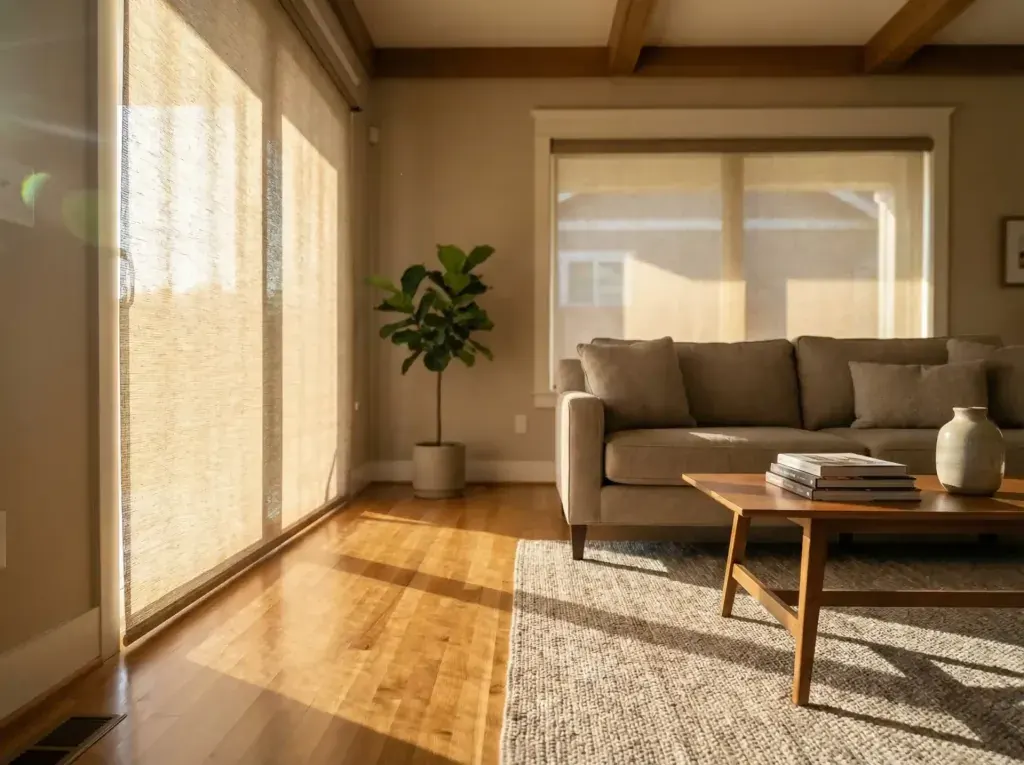 Bay and Bow Window Shades: An Avon Homeowner's Guide
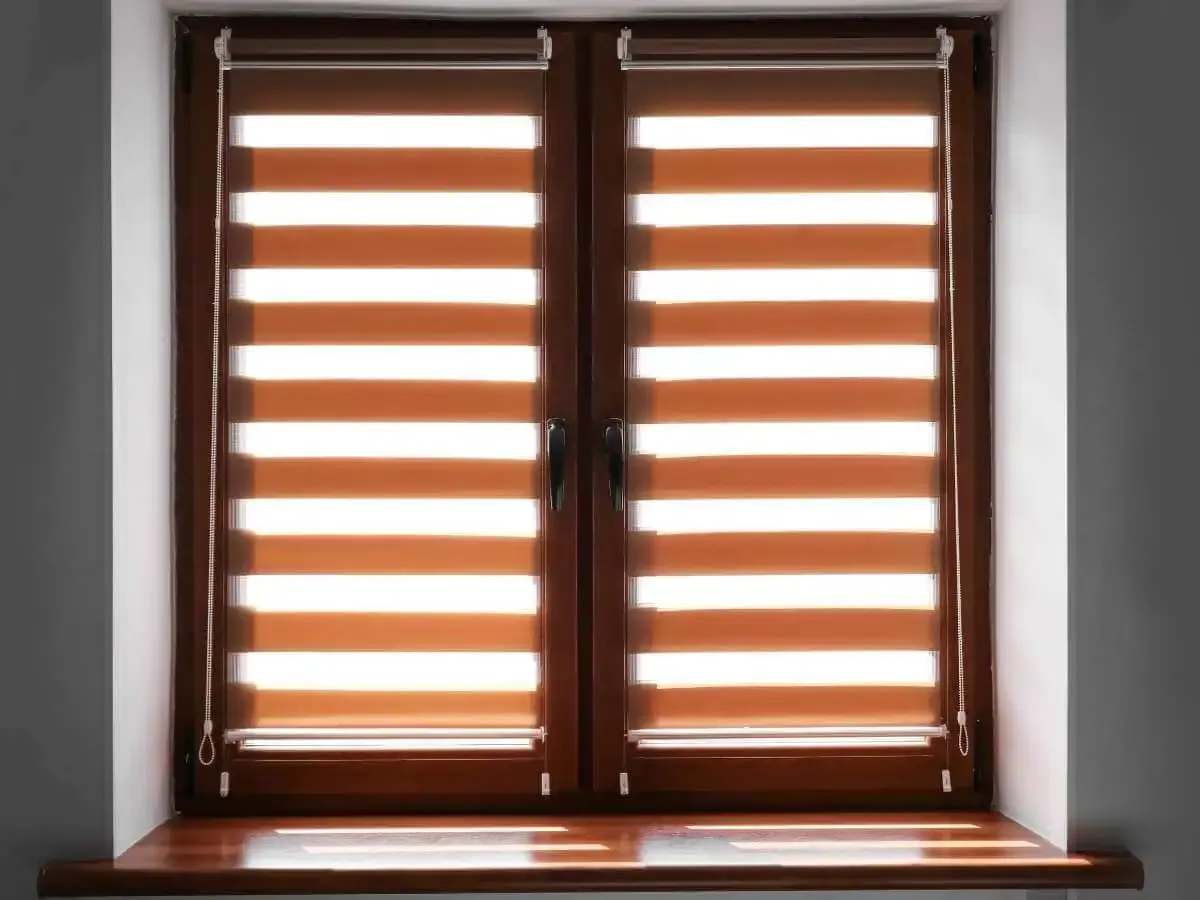 Window Treatments That Actually Hold Up in an Avon Bathroom
 How to Measure Your Own Windows for Blinds or Shades