What It Costs to Address Drafty Windows in Avon
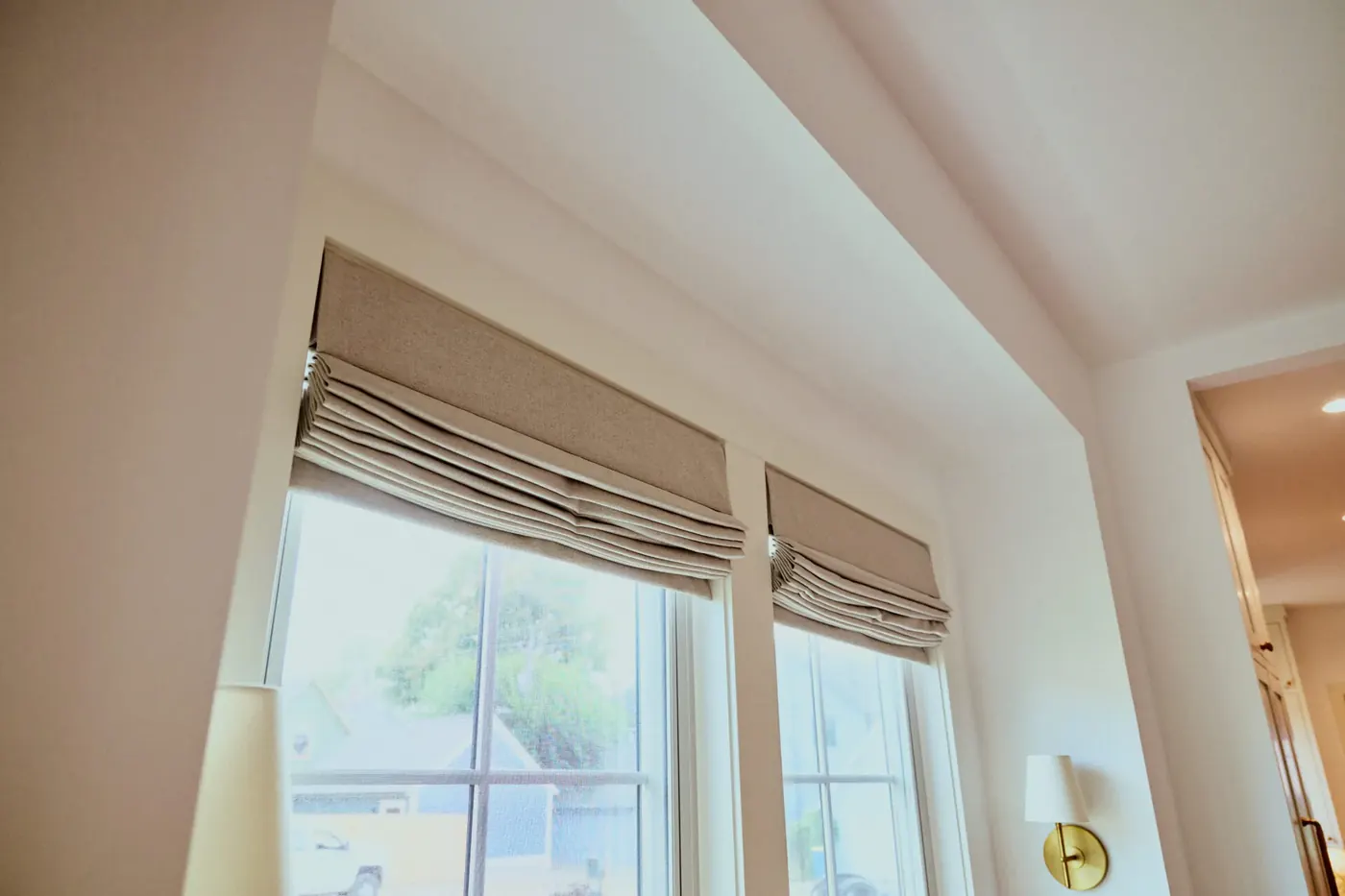
Cellular shades get talked about as an insulating upgrade more than any other window treatment, and the reason comes down to how the fabric itself is built.
Why Older Windows Feel Colder Than the Thermostat Says
Walk into a room in Avon with the furnace running and the thermostat reading 70, then stand a foot from the glass. It's colder there. Not because the air is different, but because your body is losing heat to that cold pane through radiation, the same way you feel a chill standing near a walk-in cooler door even with it shut. Glass surface temperature on a January night can sit 20 or 30 degrees below the room's air temperature, and your skin responds to that difference whether or not a single molecule of outside air ever gets in.
There's a second effect stacked on top of it. The air touching that cold glass cools, gets denser, and sinks, rolling down the pane and spilling out across the floor in front of the window. People call this a draft, and it feels exactly like one, but it can happen even on a window with a tight, well-sealed frame. Older double-hung windows common in a lot of Avon neighborhoods make this worse, since the glass itself is often single-pane or early double-pane with a lower insulating value than anything sold today.
Knowing which of these is happening in a given room matters, because a shade or drapery panel addresses the radiant and convective chill directly. It does very little for an actual air leak around a bad seal, which is a separate repair entirely.
How Cellular Shades Trap Air Instead of Just Blocking Light
Cellular shades cost more than a basic roller or a set of aluminum blinds, and the honeycomb construction is why. Rows of small air-filled cells sit between the fabric layers, and that trapped air gives the shade an actual insulating value on top of blocking light, something a flat roller shade fabric doesn't provide regardless of how heavy the material is.
Single-cell fabric is the more affordable option and still adds a real air buffer, generally in the R-1.5 to R-2 range per manufacturer specs. Double-cell steps up in price, often meaningfully, in exchange for a second row of pockets and a published R-value more like R-3 to R-3.5. For a budget covering several windows, it's reasonable to put double-cell where a room is genuinely cold, sunrooms and north-facing bedrooms among them, and stick with single-cell everywhere else in the house.
Mount Style and Fit Change How Much Draft Gets Through
A shade that doesn't fit right gives away most of whatever it was bought for. Say an inside mount leaves a half-inch gap on each side because the measurement was sloppy; that's a half-inch of open path for cold air rolling off the glass to spill straight past the shade and into the room. It happens more often than anyone likes to admit, usually from a rushed measure or a shade ordered off a size chart instead of the actual opening.
Outside mount sidesteps a lot of that risk since it overlaps the frame instead of trying to fit inside it exactly. On an old, slightly out-of-square Avon opening, that's usually the smarter call, even if it means a slightly larger shade than the window technically requires. Side channels close what's left. Skip them on a bad window and don't be surprised the shade underperforms.
Layering Shades and Drapery for the Coldest Rooms
Think of the cellular shade as doing the primary work and drapery as a finishing layer on top of it, not a replacement for it. A lined drapery panel hung over a properly fitted cellular shade adds a second buffer of still air, and it's the layer people actually feel when they walk past a window at night, since it's the surface closest to the room.
For a genuinely cold room, room-darkening or blackout cell fabric under a lined panel stacks light control with the insulating benefit, useful in an Avon bedroom that faces a cold exposure. The combination costs more than either treatment alone, but it's the setup that shows up most often in the rooms homeowners describe as the worst in the house before treatment and the most improved after.
What Window Treatments Can and Can't Fix
If a window whistles when the wind picks up, or there's an actual draft you can feel with your hand held right at the frame, that's an air leak, and it's a different problem than the radiant chill a shade addresses. No fabric layer fixes a gap where a frame has warped or weatherstripping has worn through.
Most cold rooms in Avon have both things going on at once: an actual leak somewhere, plus the plain physics of cold glass pulling warmth out of the room. Shades and drapery handle the second part well. The first part is worth a separate look, especially in an older home where the frames have never been addressed.
If a room in your house never quite feels as warm as the thermostat claims, a free in-home measure is a straightforward way to find out whether the fix is a shade, a layered setup, or something with the window itself.
Frequently Asked Questions
Do I need to replace my windows if a room feels cold?
Not necessarily. A lot of the chill people feel near a window is radiant heat loss and a convective draft off cold glass, both of which happen even on a window with a good seal. Cellular shades and layered drapery address that directly. Replacement matters more when there's an actual failed seal or damaged frame.
Is layering a shade and drapery worth the extra cost?
For the one or two rooms in a house that are genuinely the coldest, usually yes. For the rest of the house, a single well-fitted cellular shade often does enough. It comes down to which rooms people actually notice being uncomfortable in, not treating every window the same way.
How do I know if my window has an actual air leak versus just cold glass?
Hold your hand right at the frame on a cold, windy day. Moving air you can feel means an actual leak somewhere in the seal. A window that feels fine at the frame but still makes the room cold a foot or two away is more likely radiant chill from the glass itself, which is what shades are built to address.
 Bay and Bow Window Shades: An Avon Homeowner's Guide
 Window Treatments That Actually Hold Up in an Avon Bathroom
 How to Measure Your Own Windows for Blinds or Shades